Understanding Clinical Upholstery - Infection Control, Durability and Comfort
The upholstery on your treatment table is the surface your patients touch. It affects hygiene, durability, comfort, and the overall look of your clinic.
Most practitioners spend their research time on table frames, motors, and height ranges. The upholstery gets treated as an afterthought, reduced to a colour choice. That is a mistake.
The upholstery is the surface every patient touches. It is the part that wears out first, the part that determines infection control compliance, and the part that shapes how your clinic looks and feels.
What clinical upholstery actually is
Virtually all treatment table upholstery is PVC vinyl over foam. The vinyl is the outer skin. The foam provides cushioning. Both vary enormously in quality.
Clinical-grade PVC vinyl is engineered to resist fire, stains, mildew, oil, water, and general wear. It is thicker, more flexible, and more chemically resistant than domestic-grade vinyl.
The difference is not visible when the table is new. It becomes very visible after 12-18 months of daily clinical use. Cheap vinyl cracks, peels, and discolours. Clinical-grade vinyl stays supple and cleanable for years.
Infection control compliance
In Australia, clinical furniture must be cleanable to a standard that prevents cross-contamination between patients. This means the upholstery surface must be non-porous, seamless where possible, and resistant to the disinfectants used in clinical settings.
Cracked or torn upholstery fails this standard immediately. Once the foam underneath is exposed, it absorbs fluids, cleaning products, and microorganisms. There is no way to adequately disinfect exposed foam.
This is why upholstery quality is a clinical compliance issue, not just an aesthetic one. A table with compromised upholstery is a table that should not be in clinical use.
Foam density and thickness
Foam is measured by density (grams per cubic metre) and thickness (centimetres). Both affect patient comfort and foam longevity.
Higher density foam (32-36 g/m2 is typical for clinical tables) holds its shape longer and provides better support. Lower density foam compresses quickly and creates pressure points.
Thickness ranges from about 5cm for examination tables to 7.5cm or more for spa and massage tables where patients lie for extended periods. Thicker foam is more comfortable but makes the table taller at its lowest height setting.
When foam compresses to the point where patients can feel the frame underneath, the table needs new cushions. This typically happens after 5-8 years of heavy clinical use with quality foam, or 2-3 years with cheap foam.
Colour choices and their practical implications
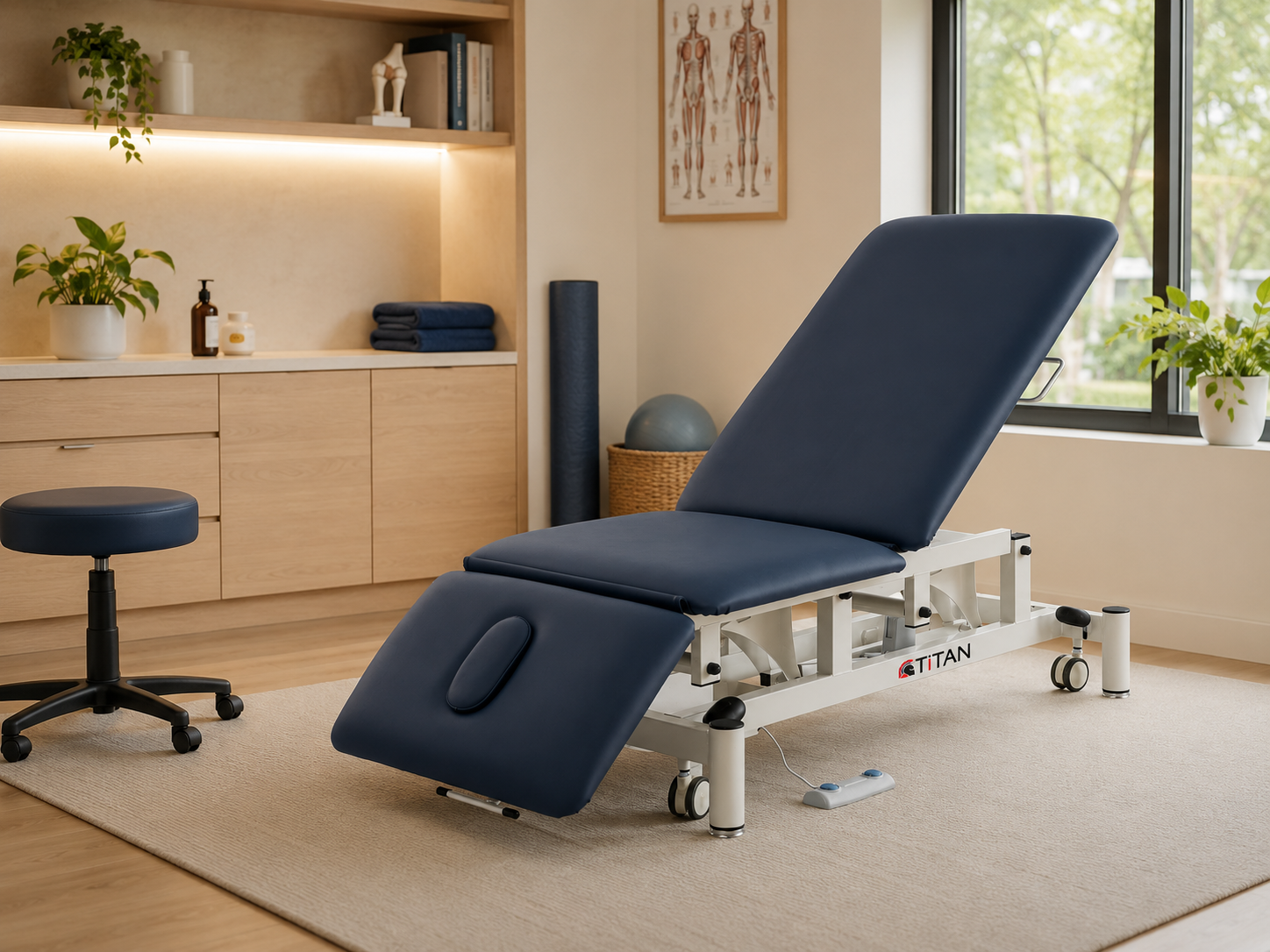
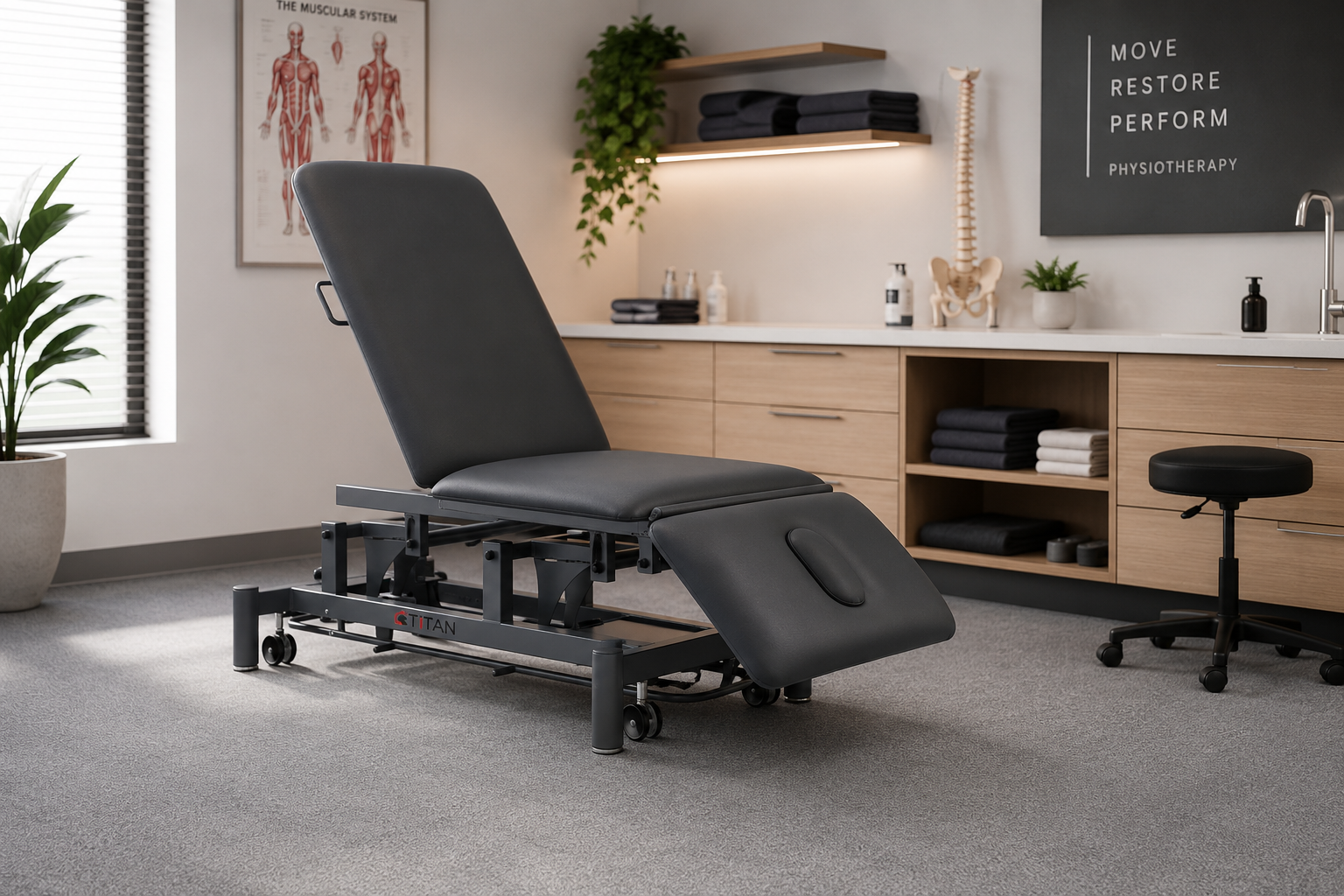
Dark colours (black, navy, charcoal) hide stains better and look professional longer. They are the standard choice for physiotherapy, chiropractic, and general clinical settings.
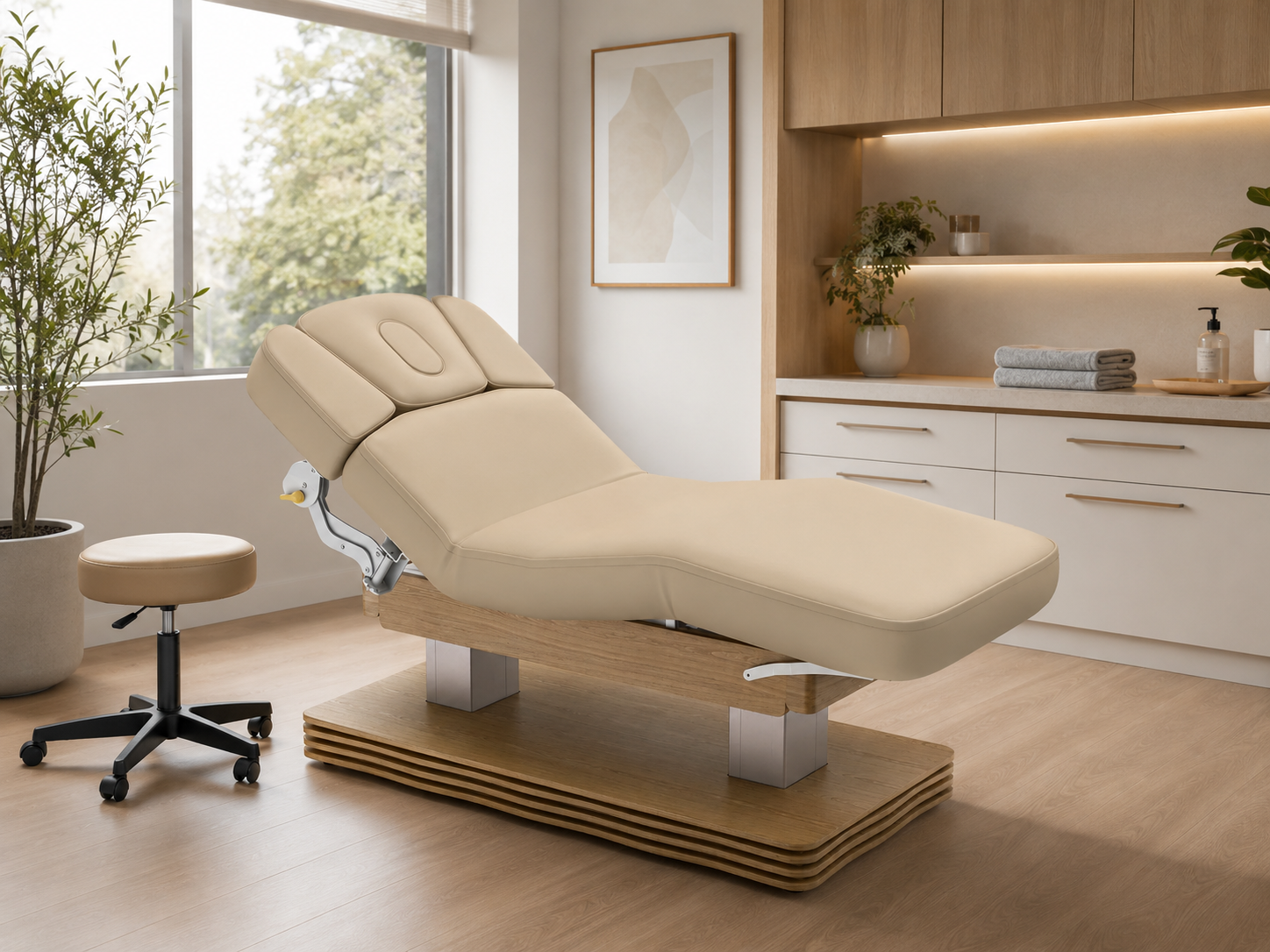
Light colours (cream, white, light grey) look premium and suit beauty therapy, spa environments, and high-end wellness clinics. They require more diligent cleaning to maintain their appearance.
Bright or unusual colours can work for paediatric clinics or branded environments, but keep in mind that unusual colours may be harder to match if you need to replace individual cushion sections later.
The most practical advice is to choose a colour that matches your clinic's interior design and that you will not tire of. You will be looking at it every day for the next decade.
When upholstery needs attention
Small tears and cracks can sometimes be repaired with vinyl repair kits. These are adequate for cosmetic fixes in non-critical areas.
If the tear is in a high-contact area (where the patient lies), on a seam, or if the foam underneath has been contaminated, professional re-upholstering or cushion replacement is the correct response.
Most quality table manufacturers offer replacement cushion sets. This is significantly cheaper than buying a new table and can extend the life of a good frame by another 5-10 years.
Protecting your upholstery investment
Use fitted table covers or disposable paper rolls during treatments. This reduces direct contact between body oils, creams, and the vinyl surface.
Clean the upholstery between every patient with an appropriate clinical surface spray. Wipe dry rather than leaving cleaning solution to air-dry, as pooled liquid can seep into seams.
Apply a vinyl conditioner every 3-6 months to maintain flexibility and prevent cracking.
Store the table away from direct sunlight if possible. UV exposure accelerates vinyl degradation, particularly for darker colours.
Titan Medical uses heavy duty PVC vinyl rated for fire, stain, mildew, oil, water, and wear resistance across the entire product range. Combined with high-density foam, this ensures every table meets clinical standards from day one and maintains them over years of daily use.