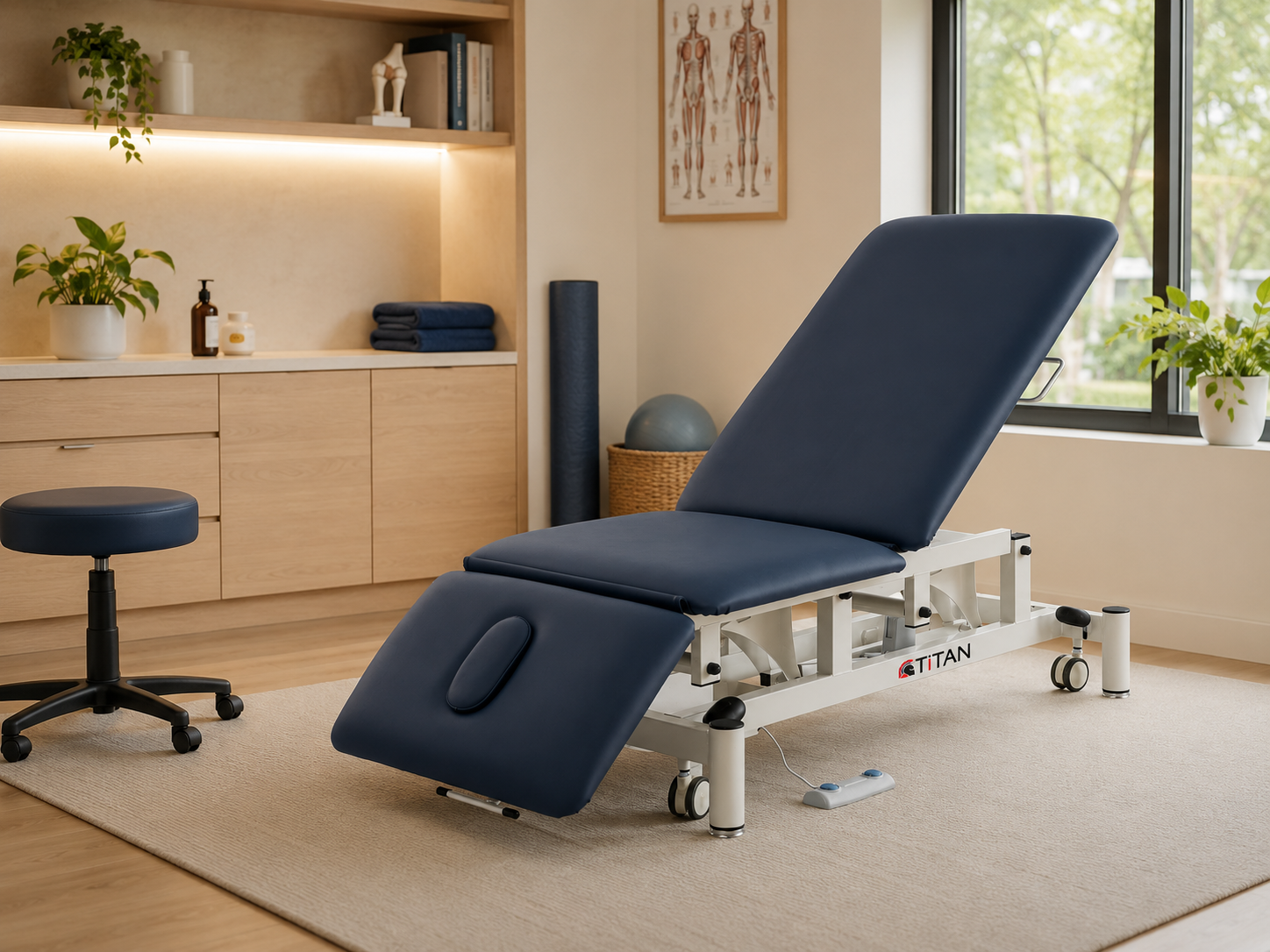
Treatment Table Maintenance - Keeping Your Investment in Top Condition
Your treatment table is a significant investment. Regular maintenance keeps it safe, hygienic, and functional for years. Here is what you need to know.
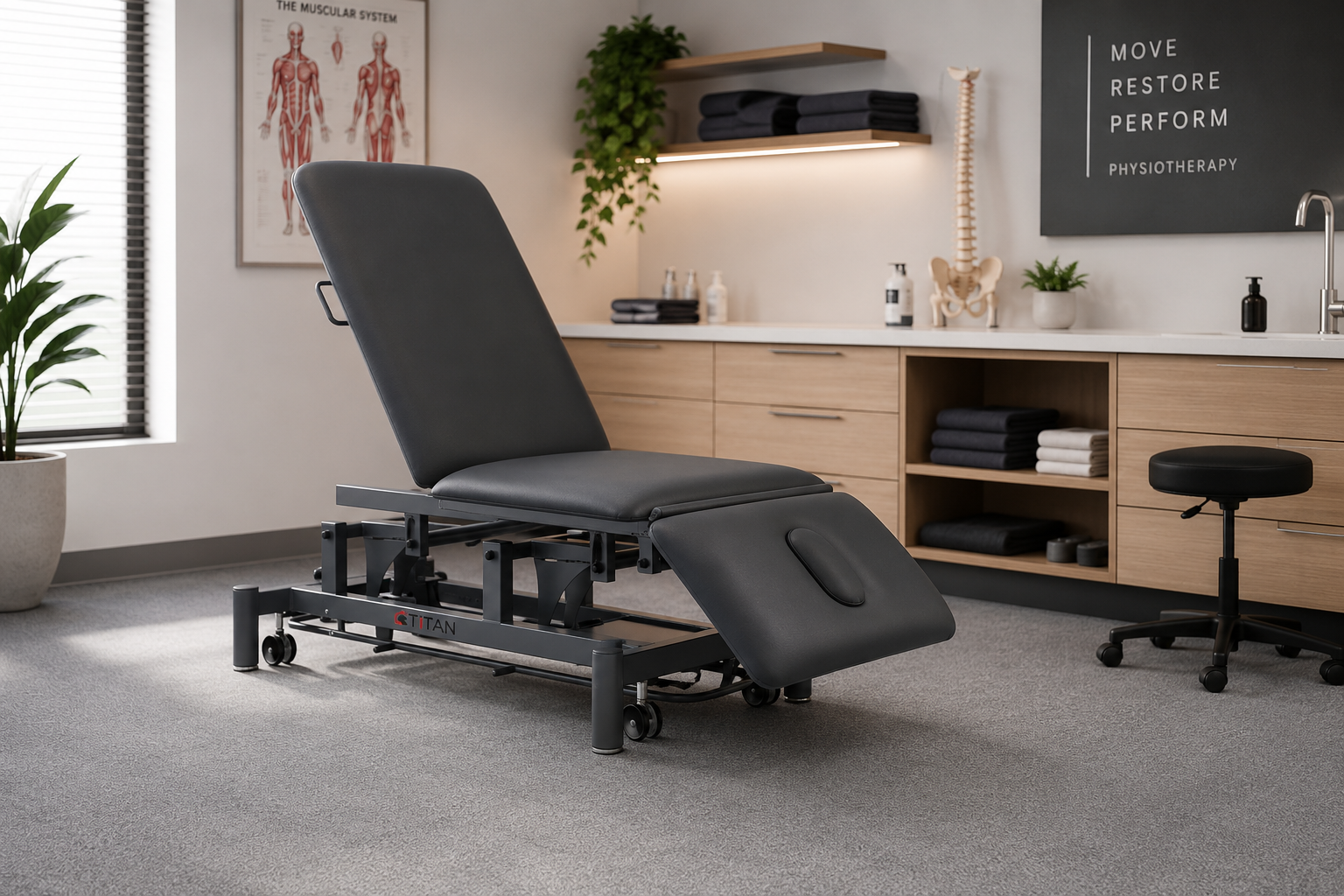
A quality treatment table should serve you for 10 to 15 years. But that only happens if you look after it. Neglected tables develop problems that are expensive to fix and potentially dangerous for patients.
Here is a practical maintenance schedule that takes minimal time and prevents the most common issues.
Daily cleaning
Wipe down the upholstery between every patient with a clinical-grade disinfectant. Avoid bleach-based products, as they degrade vinyl over time. A mild hospital-grade surface spray and a clean cloth is all you need.
Pay attention to the face hole area and the edges of the cushion where body oils accumulate. These spots are the first to deteriorate if cleaning is inconsistent.
Weekly checks
Once a week, run through a quick inspection.
Check the upholstery for any small tears, cracks, or lifting seams. Catching a minor tear early means a simple repair. Leaving it means the foam underneath absorbs sweat and cleaning products, leading to hygiene issues and a costly full re-upholster.
Test all adjustment mechanisms. For electric tables, run the height adjustment through its full range. For gas strut sections, check that they hold position without slowly drifting. If a gas strut is losing pressure, it needs replacement before it fails during treatment.
Check the castors. Lock and unlock each one to make sure they engage properly. A castor that does not lock is a safety hazard.
Monthly maintenance
Lubricate all pivot points and moving joints. Use a light machine oil or silicone spray on hinges, gas strut mountings, and any mechanical adjustment points. This prevents metal-on-metal wear and keeps adjustments smooth.
For electric tables, check the power cable for any damage. Inspect the foot pedal connection. These components take a lot of wear from being on the floor near foot traffic.
Clean under the table. Dust and debris accumulate around the motor and lifting mechanism. A quick vacuum underneath prevents buildup that can affect motor performance.
Annual service
Once a year, have the table professionally serviced. This should include a full mechanical inspection, motor testing, electrical safety check, and lubrication of all internal components.
This is not optional. It is the single most important thing you can do to extend the life of your table and maintain safe working conditions. Most manufacturers recommend annual servicing, and skipping it can void your warranty.
Upholstery care tips
Never use abrasive cleaners or scouring pads on vinyl upholstery. They scratch the surface, creating micro-abrasions where bacteria can harbour.
Avoid leaving sharp instruments on the table surface. Scissors, needles, and metal clips cause punctures that are difficult to repair invisibly.
If you use oils during treatment (massage oils, essential oils), wipe them off immediately after the session. Oil left on vinyl for extended periods can soften and discolour the material.
Use a purpose-made vinyl conditioner every 3 to 6 months. This keeps the material supple and extends its life significantly.
When to replace rather than repair
If the foam has compressed to the point where patients can feel the frame through the padding, it is time for new cushions or a new table. Compressed foam does not recover.
If the motor is sluggish, makes grinding noises, or fails to reach full height, get a professional assessment. Motor replacement on a quality frame is often worthwhile. Motor replacement on a cheap frame usually is not.
If the frame itself shows structural issues like wobble, bent supports, or cracked welds, replace the table. Structural failure during treatment is a liability you cannot afford.